Unraveling the Mystery: What Makes Devon Rex Cats So Unique?
Devon Rex cats are known for their unique appearance, playful personalities, and hypoallergenic qualities. These charming felines have captured the hearts of many cat lovers worldwide. In this article, we will explore the history, physical traits, temperament, and care requirements of Devon Rex cats, as well as compare them with other cat breeds. We’ll also discuss their hypoallergenic qualities, sociable nature, intelligence, and health concerns.
The Origins of Devon Rex Cats
The Devon Rex breed originated in England during the mid-20th century. The story began in 1960 when Beryl Cox, a breeder from Devon, noticed a curly-coated kitten among her colony of stray cats. This kitten, named Kirlee, was the result of a spontaneous genetic mutation. Kirlee’s offspring inherited his distinctive coat, and thus, the foundation for the Devon Rex breed was laid.
Kirlee’s offspring were mated with domestic shorthair cats to preserve the breed’s unique characteristics. In 1967, the breed was officially recognized by the Governing Council of the Cat Fancy (GCCF) in the United Kingdom. By the early 1970s, Devon Rex cats had been introduced to North America, where they quickly gained popularity. Today, Devon Rex cats are recognized by all major cat registries worldwide.
Distinctive Physical Traits
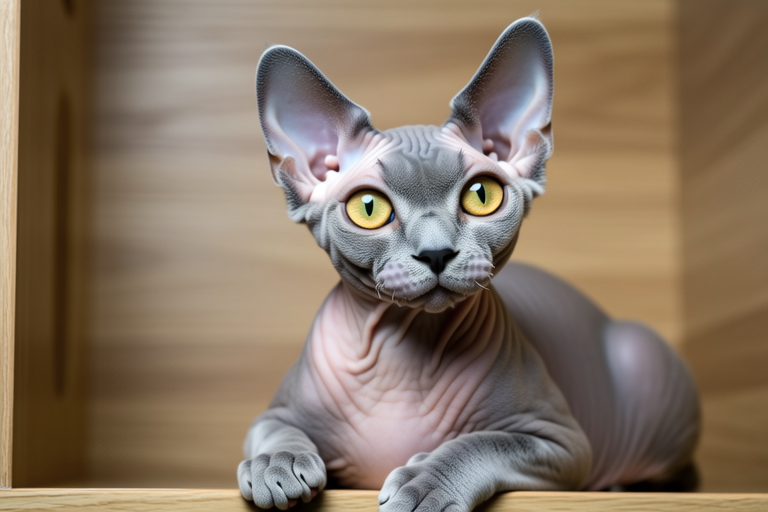
One of the most striking features of Devon Rex cats is their short, fine, and wavy coat. Unlike other breeds, their coats lack the outer guard hairs, which gives them a soft and velvety texture. Their large ears, set low on their heads, add to their distinctive appearance. Devon Rex cats have expressive faces, often described as elf-like or pixie-like, with large, oval-shaped eyes that can be green, gold, copper, or blue.
Another notable characteristic is their body type. Devon Rex cats are medium-sized, muscular, and athletic. They have long legs, large paws, and a flexible spine, which allows them to contort into unusual positions. Their tail is medium-length, tapering to a point. Despite their small size, Devon Rex cats are surprisingly heavy for their size, weighing between 5 to 9 pounds.
Hypoallergenic Qualities
Many people believe that Devon Rex cats are hypoallergenic due to their short, fine coat. However, it’s important to note that no cat breed is entirely hypoallergenic. The primary allergen in cats is a protein called Fel d 1, found in saliva, skin cells, and urine. While Devon Rex cats may produce less Fel d 1 than other breeds, individuals may still experience allergic reactions.
If you’re considering adopting a Devon Rex cat, it’s essential to spend time with the cat before making a decision. Some individuals may find that they can tolerate Devon Rex cats better than other breeds, while others may still experience allergies. It’s also recommended to wash your hands after handling the cat and to keep your living space clean to minimize exposure to allergens.
Temperament and Sociability
Devon Rex cats are known for their playful, affectionate, and social nature. They are highly intelligent and enjoy interactive play, making them excellent companions for families with children and other pets. Their curiosity and agility make them natural entertainers, often engaging in acrobatic feats and exploring every corner of their environment.
These cats thrive on human interaction and attention, often following their owners around the house and seeking out lap time. They are not overly dependent but do appreciate companionship. Devon Rex cats are also known for their vocalization, often chirping, trilling, or meowing to communicate with their humans. Their communication skills are part of what makes them such engaging pets.
Intelligence and Training
Devon Rex cats are highly intelligent and trainable. They can learn tricks and respond well to positive reinforcement techniques. Their problem-solving abilities make them natural puzzle solvers, and they enjoy interactive toys that challenge their minds. Devon Rex cats are also known for their ability to understand and follow commands, making them ideal candidates for clicker training.
Training your Devon Rex cat can strengthen the bond between you and your pet and provide mental stimulation. Start with simple commands like “sit” or “come,” and gradually introduce more complex tasks. Use treats and praise to reward good behavior, and avoid punishment, as it can lead to fear and aggression. With patience and consistency, you can teach your Devon Rex cat a variety of tricks and behaviors.
Care Requirements
While Devon Rex cats are generally healthy, they do require specific care to maintain their well-being. Their short, fine coat requires regular grooming to prevent matting and tangling. Brush your Devon Rex cat at least once a week, paying special attention to areas prone to tangles, such as behind the ears and under the chin. Bathing is usually unnecessary unless your cat gets particularly dirty.
Devon Rex cats are active and require plenty of exercise to stay healthy. Provide them with climbing structures, scratching posts, and interactive toys to keep them entertained. Rotate their toys regularly to prevent boredom and encourage physical activity. Regular exercise helps maintain their muscle tone and prevents obesity, a common health concern in indoor cats.
Feeding your Devon Rex cat a balanced diet is crucial for their overall health. Consult with your veterinarian to determine the appropriate amount and type of food for your cat based on their age, weight, and activity level. Avoid overfeeding, as obesity can lead to various health issues, including diabetes, arthritis, and heart disease. Fresh water should always be available to your cat.
Health Concerns
Devon Rex cats are generally healthy, but they are prone to certain genetic conditions. One of the most common health issues in Devon Rex cats is patellar luxation, a condition where the kneecap dislocates from its normal position. This can cause pain and lameness, and in severe cases, surgical intervention may be necessary.
Another genetic condition seen in Devon Rex cats is progressive retinal atrophy (PRA), a degenerative eye disease that can lead to blindness. Regular veterinary check-ups and early detection are crucial for managing these conditions. Genetic testing is available for some of these conditions, and responsible breeding practices can help reduce the incidence of these diseases.
Comparison with Other Breeds
When compared to other cat breeds, Devon Rex cats stand out for their unique appearance and personality. Their short, fine coat and large ears distinguish them from other curly-coated breeds, such as Cornish Rex cats. While both breeds share similar genetic mutations, Cornish Rex cats have longer bodies and more pronounced arches in their backs.
Devon Rex cats are often compared to Sphynx cats due to their hypoallergenic qualities and affectionate nature. However, Sphynx cats are completely hairless, while Devon Rex cats have a fine, wavy coat. Another difference is that Sphynx cats tend to be more sensitive to temperature changes, requiring more care in hot and cold weather.
Devon Rex cats are also compared to Siamese cats due to their sociable nature and vocalization. However, Siamese cats are larger, have shorter fur, and are more vocal. Devon Rex cats are more adaptable and less demanding than Siamese cats, making them suitable for a wider range of households.
Actionable Advice for Potential Owners
If you’re considering adopting a Devon Rex cat, here are some tips to ensure a successful adoption:
- Research reputable breeders: Look for breeders who prioritize the health and well-being of their cats. Ask about the breeder’s breeding practices, health screening, and guarantees.
- Spend time with the cat: Spend time with the cat before making a decision to ensure compatibility. Observe their behavior, temperament, and health.
- Prepare your home: Create a safe and comfortable environment for your new cat. Provide them with a litter box, scratching post, toys, and a cozy bed.
- Gradual introduction: If you have other pets, introduce them gradually to avoid conflicts. Supervise interactions until all parties are comfortable.
- Regular veterinary care: Schedule regular check-ups with your veterinarian to monitor your cat’s health and address any concerns.
Conclusion
Devon Rex cats are unique and captivating creatures with distinctive physical traits, playful personalities, and hypoallergenic qualities. Their origins, history, and development have shaped the breed into what it is today – a popular choice for cat lovers worldwide. Understanding their care requirements, health concerns, and comparisons with other breeds can help potential owners make informed decisions about adopting a Devon Rex cat.
Whether you’re a current owner or considering adopting one, Devon Rex cats offer a rewarding and enriching experience. With proper care, attention, and love, these intelligent and sociable felines can bring joy and companionship to your home for years to come.
