The Popularity and Conservation of Clownfish
Clownfish have gained immense popularity over the years, primarily due to their iconic role in popular culture and their striking appearance. This article explores the reasons behind their popularity, delves into their unique symbiotic relationship with anemones, analyzes their appeal to aquarium enthusiasts, investigates the challenges of keeping them in home aquariums, and highlights conservation efforts to protect these fish and their habitats.
Iconic Role in Popular Culture
The release of Finding Nemo in 2003 significantly boosted the popularity of clownfish. The animated film follows the journey of Marlin, a clownfish, as he searches for his son Nemo, who was captured by divers and taken to a dentist’s office aquarium. The movie’s success introduced millions of viewers to the fascinating world of clownfish and their marine environment. Since then, clownfish have become one of the most recognizable and beloved sea creatures globally.
Symbiotic Relationship with Anemones
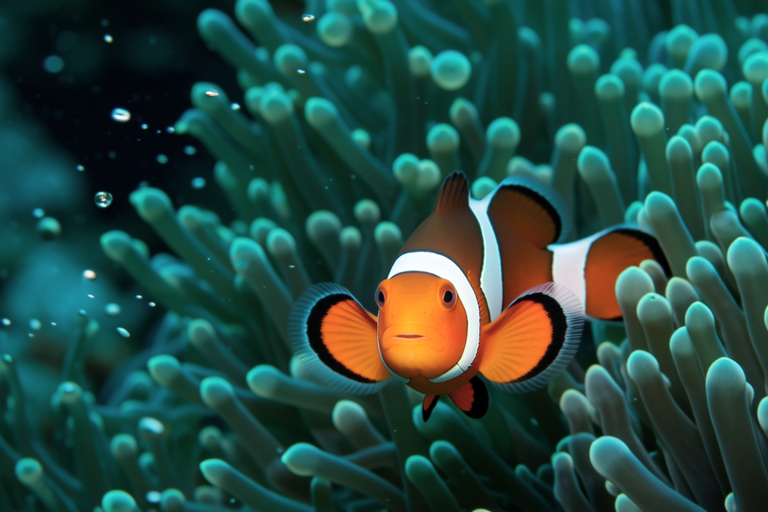
One of the most remarkable aspects of clownfish is their unique symbiotic relationship with sea anemones. This mutualistic partnership benefits both species. The clownfish, also known as anemonefish, live among the tentacles of sea anemones, which provide protection from predators. The anemone’s stinging cells, called nematocysts, paralyze prey and deter potential threats. However, clownfish have developed a mucus layer that protects them from the anemone’s sting, allowing them to move freely within the anemone without harm.
In return, clownfish offer several advantages to the anemone. They help to clean the anemone by removing debris and parasites, thus reducing the risk of infection. Additionally, clownfish attract other small fish to the anemone, which serves as a food source. The clownfish also fan the anemone’s tentacles with their fins, increasing oxygen flow and promoting better health. This mutually beneficial relationship exemplifies the intricate balance of marine ecosystems.
Vibrant Colors and Appeal to Aquarium Enthusiasts
Clownfish are renowned for their striking appearance and vibrant colors, which range from bright orange and white stripes to more muted tones like brown and green. Their contrasting patterns and bold hues make them visually appealing to aquarium enthusiasts. These captivating colors not only enhance the aesthetic value of home aquariums but also serve a practical purpose in the wild. The distinct coloration helps clownfish communicate with one another, establish territories, and attract mates.
Their adaptability to various environments further contributes to their popularity among aquarists. Clownfish can thrive in both saltwater and freshwater tanks, making them accessible to a wide range of hobbyists. Moreover, they are relatively easy to care for compared to other marine fish, which has contributed to their widespread presence in home aquariums.
Challenges of Keeping Clownfish in Home Aquariums
Despite their popularity, keeping clownfish in home aquariums presents several challenges. Maintaining optimal water conditions is crucial for the health and well-being of clownfish. They require specific parameters, such as a pH level between 8.1 and 8.4, a salinity of 1.020 to 1.025, and a temperature range of 76 to 82 degrees Fahrenheit. Hobbyists must regularly test and adjust these factors to ensure a stable environment.
Proper filtration is essential to remove toxins and waste products, maintaining water quality. A high-quality protein skimmer and biological filtration are recommended to prevent ammonia and nitrite buildup. Additionally, providing ample hiding spots and incorporating live rock or anemones can simulate a natural habitat, reducing stress and promoting healthier fish.
Dietary requirements are another critical aspect of clownfish care. In the wild, they feed on algae, zooplankton, and small invertebrates. In captivity, a varied diet consisting of frozen or freeze-dried foods, such as brine shrimp, mysis shrimp, and cyclops, ensures proper nutrition. Supplementing their diet with high-quality flake or pellet food can also provide necessary vitamins and minerals.
Conservation Efforts
Clownfish and their habitats face numerous environmental threats, including climate change, coral bleaching, and overfishing. To address these challenges, various conservation efforts are underway. Marine protected areas (MPAs) have been established to safeguard critical habitats and promote sustainable fishing practices. Coral reef restoration projects aim to rebuild damaged reefs and restore ecological balance.
Research initiatives focus on understanding clownfish behavior, reproduction, and migration patterns to inform conservation strategies. Scientists study clownfish in controlled environments to gain insights into their adaptability and resilience in the face of changing ocean conditions. By combining scientific knowledge with community engagement, conservationists strive to protect clownfish populations and maintain the health of marine ecosystems.
Scientific Insights on Clownfish Behavior, Reproduction, and Migration Patterns
Clownfish exhibit complex social structures and behaviors within their anemone homes. They are typically found in groups of two or three, consisting of a dominant breeding pair and one or two non-breeding individuals. The breeding pair maintains strict territorial boundaries, aggressively defending their anemone against intruders.
Reproduction in clownfish involves external fertilization. The female lays thousands of eggs on a flat surface near the anemone, while the male fertilizes them by releasing sperm. Afterward, the male guards the eggs, fanning them with his fins to increase oxygen flow and prevent fungal growth. Once hatched, the larvae drift in the open ocean for several weeks before settling on a suitable anemone.
Migratory patterns of clownfish are influenced by environmental factors such as water temperature, current direction, and food availability. While some species remain close to their birthplace, others may travel long distances to find new territories. Clownfish demonstrate remarkable adaptability and resilience in the face of changing ocean conditions, making them valuable subjects for scientific research.
