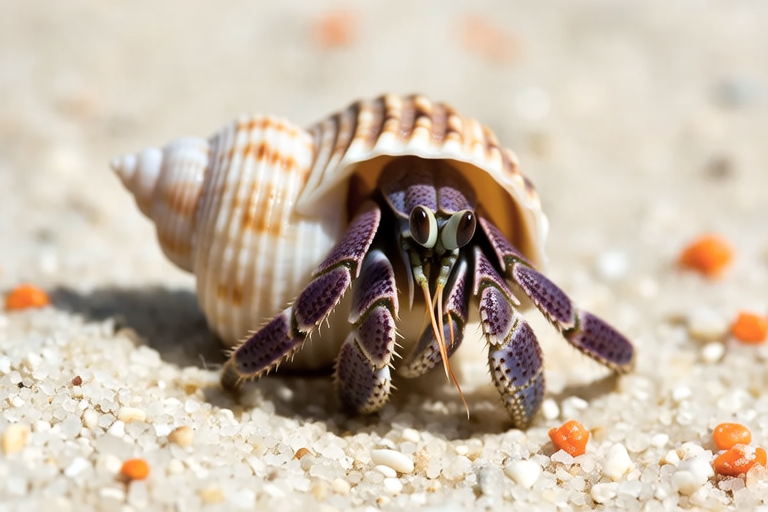
The Unique Life of Hermit Crabs
Hermit crabs are fascinating creatures that have captured the imagination of many due to their distinctive lifestyle. Beyond their famous shells, these crustaceans lead rich and varied lives, adapting to their environments in remarkable ways. Let’s delve into the natural habitats, behaviors, dietary habits, and social structures of hermit crabs, exploring how they adapt their shells as they grow, their symbiotic relationships, and their role in marine ecosystems.
Natural Habitats and Adaptations
Hermit crabs inhabit diverse environments, from tropical coral reefs to temperate rocky shores. They are particularly abundant in shallow waters where they can find ample food sources and shelter. These environments are often teeming with life, providing hermit crabs with both opportunities and challenges. Their ability to thrive in such varied settings is largely due to their flexible behavior and physical adaptations.
One of the most notable adaptations of hermit crabs is their use of empty mollusk shells for protection. As hermit crabs grow, they outgrow their current shell and must find a new one. This process involves careful selection, as the new shell must provide adequate space and protection. Some hermit crabs have been observed engaging in “shell fights” with others of their kind to secure a desirable shell. Once a new shell is found, they quickly move in, ensuring their safety from predators.
Dietary Habits and Feeding Behavior
Hermit crabs are omnivorous scavengers, feeding on a wide variety of organic matter. They play a crucial role in their ecosystems by breaking down dead plant and animal material, recycling nutrients, and contributing to the overall health of the environment. Their diet includes algae, decaying plants, small animals, and even detritus. Hermit crabs are known to scavenge along the seafloor, searching for food with their long antennae and claws.
These crabs also exhibit interesting feeding behaviors. For instance, some species have been observed using tools, such as rocks or pieces of coral, to crack open hard-shelled prey like snails or mussels. This tool use demonstrates their intelligence and problem-solving abilities. Additionally, hermit crabs are opportunistic feeders, meaning they will take advantage of any available food source, making them highly adaptable to changing conditions.
Social Structures and Communication
Contrary to popular belief, hermit crabs are not solitary creatures. While they do not live in permanent colonies like some other crustaceans, they do interact with each other in complex ways. Hermit crabs engage in social behaviors such as gathering in groups to search for food or sharing resources. These interactions often involve communication through touch, chemical signals, and even sound.
Hermit crabs are also known to form symbiotic relationships with other organisms. One of the most well-known examples is their association with sea anemones. The anemone attaches itself to the shell of the hermit crab, providing camouflage and additional protection from predators. In return, the hermit crab offers the anemone a mobile home and access to food particles it brings in from its surroundings. This mutually beneficial relationship highlights the intricate web of life in marine ecosystems.
Nocturnal Activities and Mating Rituals
Hermit crabs are primarily nocturnal, meaning they are most active during the night. This behavior helps them avoid daytime predators and take advantage of cooler temperatures. During the day, hermit crabs often remain hidden in their shells or under rocks and debris. At night, they emerge to forage for food, explore their surroundings, and engage in social activities.
Mating rituals among hermit crabs are equally intriguing. Male hermit crabs produce pheromones to attract females, and once a pair has formed, they engage in courtship displays. These displays may include waving their claws or antennae, drumming on the ground, or even performing synchronized movements. After mating, the female carries fertilized eggs attached to her abdomen until they hatch. The larvae then drift in the ocean currents before settling on the seafloor as juveniles.
Defense Mechanisms and Environmental Impact
Hermit crabs have several defense mechanisms to protect themselves from predators. One of the most effective is their ability to retreat into their shells when threatened. Inside their shells, hermit crabs can close themselves off almost entirely, making it difficult for predators to reach them. Additionally, some species have developed spines or spikes on their shells to deter potential attackers.
Environmental changes, such as climate change and pollution, pose significant threats to hermit crab populations. Rising sea temperatures and acidification can affect the availability of suitable shells and disrupt the delicate balance of marine ecosystems. Pollution, particularly plastic waste, can also harm hermit crabs by introducing toxins into their environment or by causing them to mistake non-biodegradable materials for potential homes.
Conservation Efforts and Future Outlook
To protect hermit crab populations, conservation efforts focus on reducing pollution, preserving natural habitats, and promoting sustainable fishing practices. By minimizing human impact on marine environments, we can help ensure the survival of these fascinating creatures. Educational programs and community outreach initiatives also play a vital role in raising awareness about the importance of hermit crabs and encouraging responsible behavior.
In conclusion, hermit crabs are remarkable animals with unique lifestyles that reflect their adaptability and resilience. From their use of shells to their complex social behaviors, these creatures offer valuable insights into the workings of marine ecosystems. By understanding and appreciating hermit crabs, we can work towards protecting them and the environments they call home.
