Distinctive Behaviors of Siamese Cats
The Siamese cat is one of the most recognizable and beloved breeds due to its striking appearance and unique personality traits. Originating from Thailand, formerly known as Siam, these cats have been admired for centuries for their vocal nature, intelligence, loyalty, and distinct social preferences. This article explores the distinctive behaviors of Siamese cats, analyzing how their history and breeding have influenced these traits, and providing insights into their communication styles, including vocalization patterns and body language. Additionally, we will discuss common behavioral quirks and offer tips for owners to bond with and train their Siamese cats effectively.
History and Breeding
The Siamese breed has a rich history that dates back hundreds of years. According to legend, these cats were once revered by royalty in ancient Siam (modern-day Thailand). They were believed to possess mystical powers and were often kept in temples or palaces. The first Siamese cats were introduced to Western countries in the late 19th century, when they were brought to England and later to the United States. Over time, selective breeding has refined the Siamese’s appearance and temperament, resulting in the elegant and vocal felines we know today.
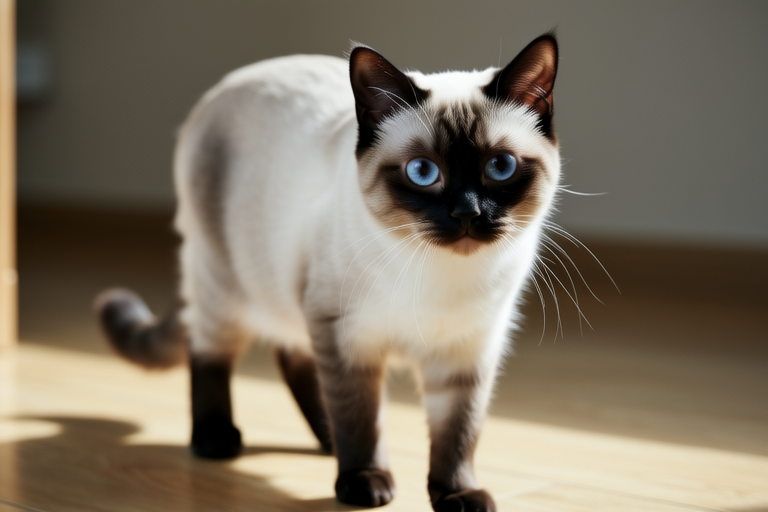
The Siamese cat is a member of the oriental group of cats, characterized by their almond-shaped blue eyes, triangular heads, and slender bodies. Their coat is short, fine, and glossy, with points on their ears, paws, tail, and face, which are darker than the rest of their bodies. These physical characteristics, combined with their distinctive behaviors, make the Siamese one of the most recognizable cat breeds.
Vocal Nature
One of the most notable traits of Siamese cats is their tendency to be very vocal. These cats are known for their communicative meows, which can range from soft chirps to loud, insistent yowls. Unlike other breeds that may be more reserved in their vocalizations, Siamese cats are often described as “talkative” and seem to enjoy engaging in conversations with their human companions. Scientifically, this behavior can be attributed to the breed’s high level of social interaction and their desire to communicate their needs and desires.
Siamese cats use vocalization as a primary means of communication. They may meow to express hunger, boredom, or simply to seek attention. Some Siamese cats even develop a habit of “talking” back to their owners, responding to words or phrases with specific meows. This vocal behavior is often seen as a sign of affection and a way for the cat to strengthen its bond with its human family.
Intelligence and Loyalty
Siamese cats are renowned for their intelligence, which sets them apart from many other cat breeds. They are quick learners and can easily adapt to new environments or routines. This intelligence is evident in their problem-solving abilities and their curiosity about their surroundings. Siamese cats often engage in playful activities that challenge their minds, such as chasing toys or exploring new spaces. They also tend to form strong bonds with their human families, showing loyalty and affection towards their owners.
Studies have shown that cats, in general, have a higher cognitive ability than previously thought. Siamese cats, in particular, exhibit advanced problem-solving skills and can learn tricks or respond to commands with relative ease. Their loyalty is another trait that makes them excellent companions. They often follow their owners around the house and may become distressed if left alone for long periods. This attachment to their human family members is a result of both their social nature and their need for companionship.
Social Preferences
Siamese cats are highly social animals that thrive in environments where they receive plenty of attention and interaction. Unlike some cat breeds that prefer solitude, Siamese cats enjoy being around people and other animals. They are often described as “dog-like” in their behavior, as they may follow their owners from room to room or even accompany them on walks. This social preference is likely rooted in their historical role as companions to royalty and nobility in ancient Siam.
Siamese cats are also known to get along well with other pets, especially if introduced at an early age. They are generally tolerant of children and may even enjoy playing with them. However, it is important to supervise interactions between Siamese cats and young children to ensure that both parties are comfortable and safe. In multi-cat households, Siamese cats may form close friendships with compatible companions, further emphasizing their social nature.
Communication Styles
In addition to their vocalizations, Siamese cats use various forms of body language to communicate their emotions and intentions. Understanding these signals can help owners better interpret their cat’s needs and desires. For example, a Siamese cat that flattens its ears or arches its back may be feeling threatened or anxious. On the other hand, a cat that rubs against its owner or purrs contentedly is likely expressing affection and comfort.
Siamese cats are particularly expressive with their tails. A relaxed Siamese cat will hold its tail upright, while a nervous or excited cat may twitch or flick its tail rapidly. Owners can also observe changes in their cat’s posture and facial expressions to gauge its mood. For instance, a Siamese cat that tucks its head down or flattens its ears may be feeling insecure or uncomfortable. By paying attention to these subtle cues, owners can build stronger bonds with their Siamese cats and provide appropriate care and attention.
Behavioral Quirks
While Siamese cats are generally affectionate and sociable, they may display certain behavioral quirks that can be challenging for some owners. One common quirk is their tendency to be overly attached to their owners, sometimes to the point of becoming clingy or demanding. Siamese cats may follow their owners around the house, refuse to be left alone, or insist on being involved in every activity. While this behavior stems from their loyalty and desire for companionship, it can be overwhelming for owners who value their personal space.
Another behavioral quirk is the Siamese cat’s love for climbing and perching. These cats are natural climbers and may be found sitting on high shelves, window sills, or even the top of refrigerators. Providing ample opportunities for climbing and exploration can help satisfy this innate desire and prevent destructive behavior. Siamese cats may also be prone to overgrooming or chewing on objects, especially if they are bored or stressed. Offering interactive toys and engaging in regular play sessions can help alleviate these issues.
Tips for Bonding and Training
Bonding with a Siamese cat requires patience, consistency, and a willingness to meet their social and emotional needs. Owners can strengthen their bond with their Siamese cats by spending quality time together, engaging in interactive play, and providing plenty of affection. It is important to establish clear boundaries and rules, especially when dealing with clingy or demanding behavior. Positive reinforcement techniques, such as offering treats or praise for good behavior, can be effective in training Siamese cats.
Training Siamese cats can be rewarding, as they are intelligent and eager to please their owners. Basic commands, such as sit, stay, and come, can be taught through consistent practice and positive reinforcement. Owners can also teach their Siamese cats to perform tricks, such as fetching or jumping through hoops. It is important to keep training sessions short and fun to maintain the cat’s interest and motivation.
Scientific Perspectives on Cat Behavior
From a scientific perspective, Siamese cats’ behaviors can be understood through the lens of evolutionary biology and psychology. Their vocal nature and intelligence can be attributed to their evolutionary adaptations for survival and social bonding. Cats, like many other animals, have evolved to communicate with their environment and social groups. Siamese cats, in particular, have developed a complex system of vocalizations and body language to convey their needs and emotions.
Research has also shed light on the genetic factors that contribute to Siamese cats’ distinctive behaviors. Studies have identified specific genes associated with coat coloration and patterning, as well as genes linked to vocalization and social behavior. Understanding these genetic influences can help explain why Siamese cats exhibit certain traits and behaviors that set them apart from other cat breeds.
